


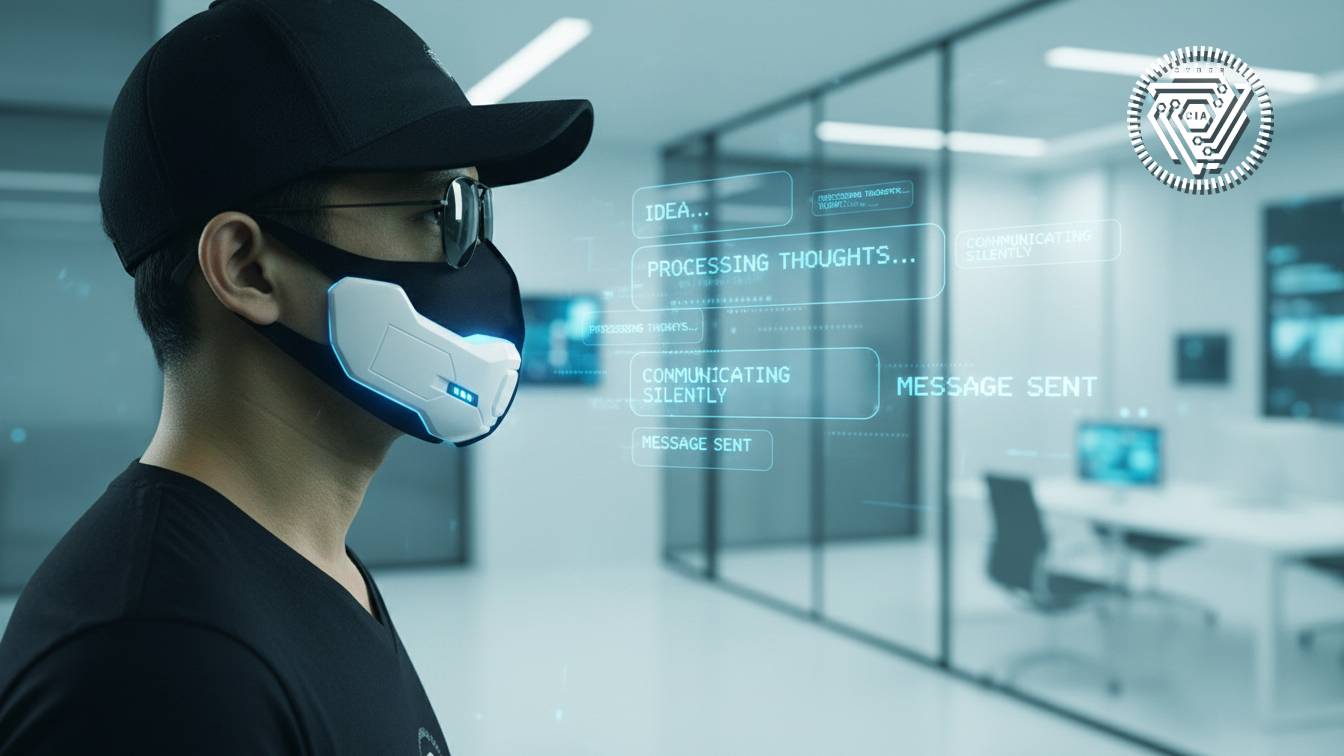
Imagine asking ChatGPT a question in the middle of an important meeting, or sending a text while in a library, without touching your phone and without making a sound. This is not mystical telepathy, this is Silent Speech Interface (SSI). Pioneered by MIT Media Lab (AlterEgo project), this technology is now commercializing in 2026. It works by capturing subtle Electromyography (EMG) signals from the skin surface of the jaw and larynx when we perform subvocalization (speaking internally).
Neuromuscular vs Brain-Computer Interface (BCI)
Critically, this approach is far more practical than implanting chips in the brain (like Neuralink) or using wet EEG caps. Signals from speech muscles are much stronger (high signal-to-noise ratio) compared to brain signals, making word translation accuracy near 96%. This is the most realistic bridge to 'Intelligence Augmentation' (IA) where humans and AI merge seamlessly.
Impact for Disability and Military
For ALS or stroke patients who lost speech ability but retain partial facial muscle function, this is a miracle restoring their voice. Conversely, the military sector uses SSI for silent communication between special forces in the field without risk of being heard by enemies. At CybermaXia, we are testing SSI prototypes for security authentication: A 'Password' spoken internally, impossible to record or shoulder-surf.