


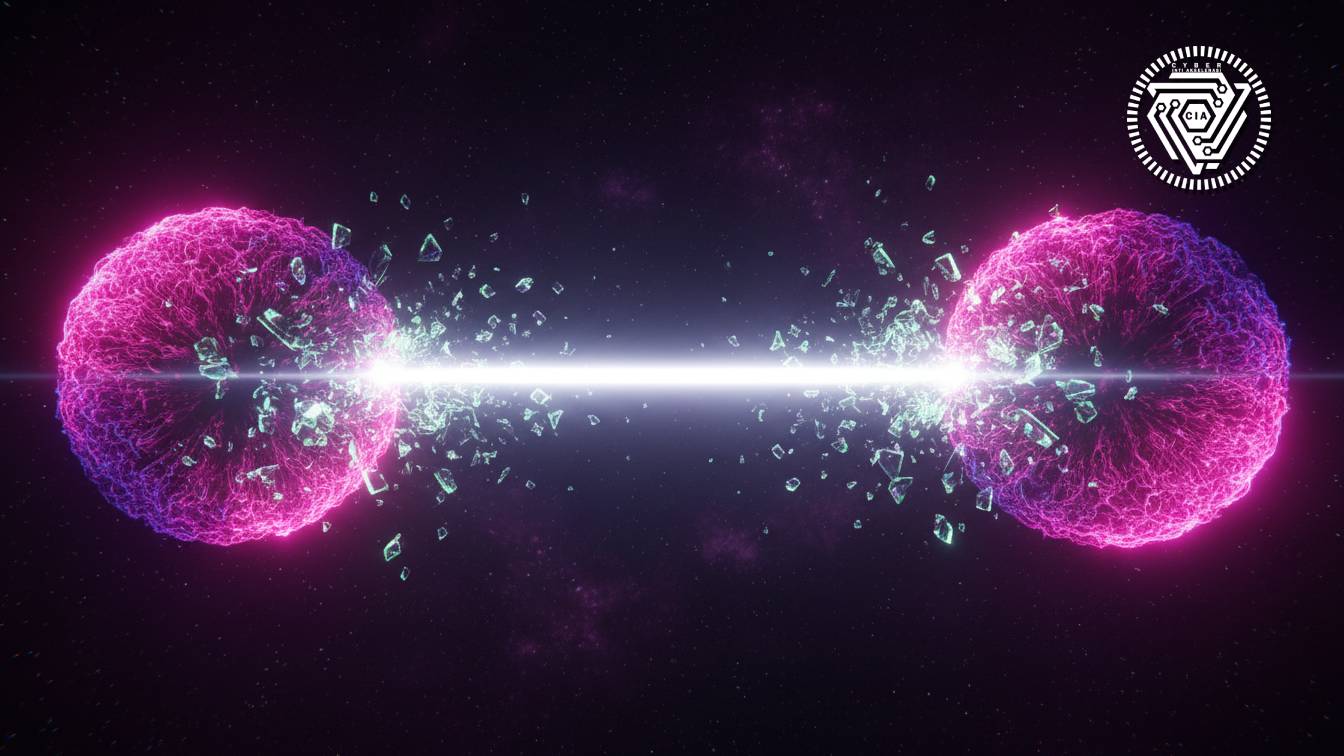
We often hear about Quantum Computers, but rarely about the Quantum Internet. Yet, they are two sides of the same coin. If quantum computers process data, the quantum internet transmits it. The difference is, the quantum internet doesn't transmit standard electron signals or laser light. It transmits quantum states (qubits) using the 'spooky' physics phenomenon Einstein called Spooky Action at a Distance: Quantum Entanglement.
Absolute Security Mechanism
In the quantum internet, information is encoded in the spin of entangled particles. The magic lies in quantum physics laws: "Observation changes reality". If a hacker tries to 'peek' (wiretap) data in transit, the particle's quantum state collapses (decoherence) instantly. The receiver immediately knows data has been compromised, and the information becomes unreadable garbage. This creates a theoretically unhackable security protocol.
Quantum Repeater Challenge
The current problem is distance. Quantum particles are fragile; they degrade after a few kilometers in fiber optics. Scientists are racing to create Quantum Repeaters—devices extending entanglement range without destroying quantum states (since the No-Cloning Theorem forbids copy-pasting quantum data). Labs in China and Europe this year successfully achieved stable quantum teleportation over 100km, the first step towards a globally absolutely secure network.